
Geography
Undergraduate Program Overview
All Students
Explore the World, Understand its Complexities
Are you interested in understanding the physical and human landscapes that shape our world? Do you want to explore the environment, urban development, sustainability, and the spatial relationships that influence the world around us? The Bachelor of Arts in Geography undergraduate program at Nipissing University is designed to provide you with a comprehensive understanding of both physical and human geography, preparing you for a wide range of careers in various industries.
Program Highlights
The Geography undergraduate program at Nipissing University offers a broad and dynamic curriculum that blends physical and human geography. Key areas of study include:
- Physical Geography: Study the natural environment, including climate, landforms, ecosystems, and the interactions between humans and the environment.
- Human Geography: Explore the ways in which human societies shape and are shaped by geographic space, including urbanization, migration, and cultural landscapes.
- Geographic Information Systems (GIS): Learn to use GIS technology to analyze spatial data, visualize patterns, and solve complex geographic problems.
- Environmental Studies: Gain a deep understanding of environmental issues such as climate change, conservation, and sustainable resource management.
- Urban Geography: Study the growth and development of cities, examining issues related to urban planning, infrastructure, and social justice.
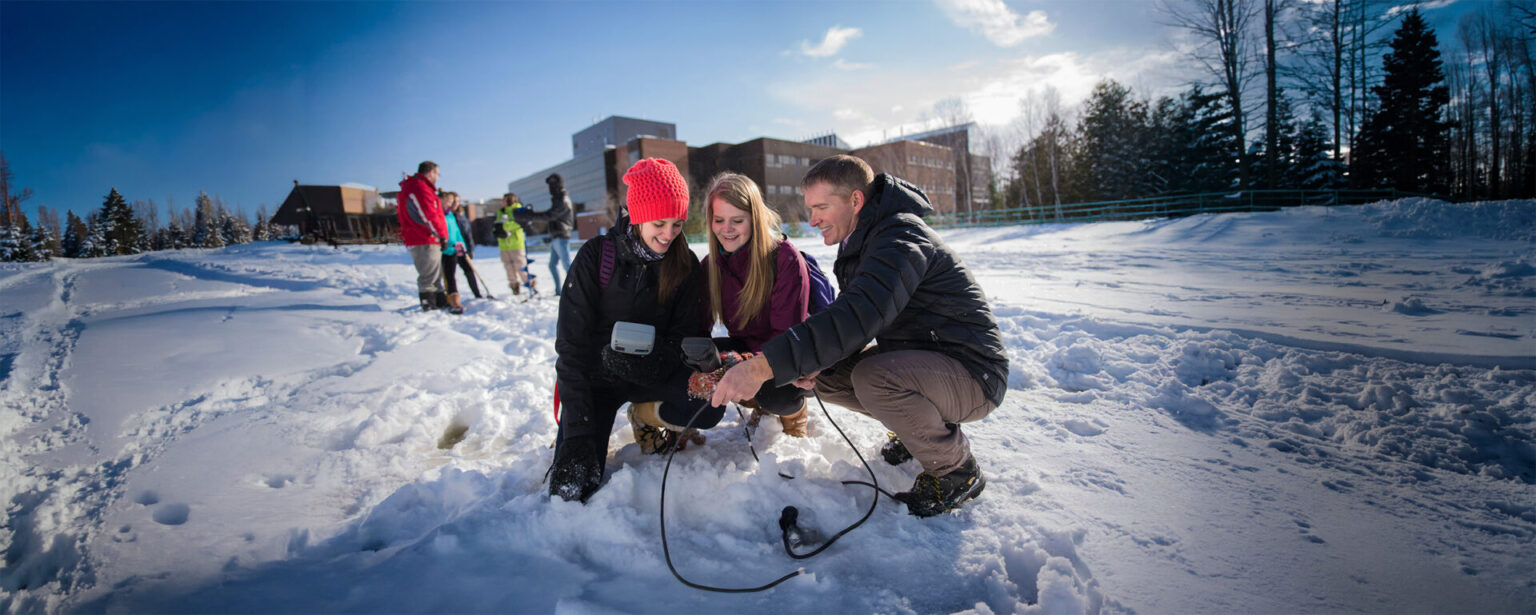
- Fieldwork and Research: Engage in hands-on learning through fieldwork and research projects, allowing you to apply geographic theory in real-world settings.
- Global Issues and Geopolitics: Understand how geography influences global political dynamics, conflicts, and international relations
Program Related Certificates:
Resources
Program Related
Why Nipissing's Geography Program?
Explore Global and Local Landscapes
Understand the processes that shape our world, from the natural environment to human settlements, through engaging coursework and field experiences.
Interdisciplinary Approach
Combine the study of the environment, human societies, and geographic technologies to gain a holistic view of how our world functions.
Hands-on Learning
Gain valuable practical experience through field trips, research projects, and the opportunity to work with the latest geographic information systems (GIS) technology.
Dedicated Faculty
Learn from experienced faculty who are passionate about geography and committed to helping you achieve your academic and professional goals.
Focus on Sustainability and Urban Planning
Study the challenges and opportunities of sustainable development and urban planning, two of the most critical global issues.
Flexible Career Pathways
Choose from a variety of concentrations and electives that allow you to focus on areas such as environmental studies, urban geography, or GIS technology.
Collaborative Environment
Engage in a collaborative learning environment that promotes teamwork and critical thinking.

Admission Requirements
To qualify for admission, students must meet the General Admission Requirements, plus program specific prerequisites.
General Admission Requirements include:
Ontario Secondary School Diploma including six 4U/4M courses
Future Careers
A Geography degree from Nipissing University equips graduates with spatial thinking, environmental awareness, and data analysis skills that support careers in planning, sustainability, and public service. Graduates may pursue roles in:
Urban & Regional Planning
Urban planners, regional planners, land use planners, or municipal planning assistants.
Environmental & Sustainability Careers
Environmental consultants, climate change analysts, environmental educators, or natural resource managers.
Geographic Information Systems (GIS) & Mapping
GIS analysts, cartographers, spatial data technicians, or geospatial analysts.
Government & Public Policy
Government policy analysts, environmental policy advisors, public sector researchers, or program officers.
Tourism, Recreation & Community Development
Tourism managers, recreation planners, community development coordinators, or sustainability coordinators.
Logistics & Applied Geography
Logistics coordinators, supply chain analysts, transportation planners, or operations analysts.
Real People, Real Impact
I love my program because the professors have such unique skills and knowledge they bring into the classroom. I feel I can really develop a connection and learn from their support.
Abby N.
Class of 2026
I love how helpful and personable the teachers are.
Annie L.
Class of 2028
Program Requirements
How the Common Degree Structure Works
At Nipissing, you can choose a minor, major, specialization, or honours specialization—each offering a different level of focus and flexibility to match your goals.
Check out this breakdown of the Common Degree Structure to see how you can make your interests fit your degree.
Program Options & Course Requirements
Find required courses for each type of specialization using this link.
Request More Info
Explore Other Programs


Disclaimer:
While every effort is made to ensure accuracy on this site, in the event of a discrepancy, Nipissing’s Academic Calendar is the official reference.