

Environmental Geography
Undergraduate Program Overview
All Students
Understand the Planet. Drive Sustainable Change.
Environmental Geography explores the interactions between people and the natural world, tackling critical issues such as climate change, sustainability, resource management, and environmental policy. Nipissing University’s Environmental Geography program provides you with the knowledge and technical skills to analyze environmental challenges and develop real-world solutions.
Program Highlights
Our Environmental Geography curriculum covers key topics, including:
- Climate Change & Global Warming: Analyze the causes and consequences of climate shifts and study strategies for mitigation and adaptation.
- Sustainable Resource Management: Explore approaches to managing forests, water systems, and mineral resources responsibly.
- GIS & Remote Sensing Applications: Use cutting-edge mapping and data analysis tools to assess environmental conditions and trends.
- Environmental Policy & Planning: Learn about policy frameworks that guide conservation, land use, and disaster management.
Program Related Certificates:
Resources
Program Related
Why Nipissing's Environmental Geography Program?
Hands-On Learning
Study pressing environmental issues through fieldwork, lab-based research, and GIS technology, gaining practical experience in environmental analysis.
Cutting-Edge Technology
Learn to use Geographic Information Systems (GIS), remote sensing, and spatial data analysis to assess environmental conditions and inform decision-making.
Fieldwork in Northern Ontario
Take advantage of Nipissing’s unique location to study forests, freshwater ecosystems, climate patterns, and human impact on the environment through immersive outdoor learning.
Small Class Sizes & Expert Faculty
Work closely with experienced environmental geographers who are dedicated to supporting your academic and professional growth.

Admission Requirements
To qualify for admission, students must meet the General Admission Requirements, plus program specific prerequisites.
General Admission Requirements include:
Ontario Secondary School Diploma including six 4U/4M courses
Future Careers
An Environmental Geography degree from Nipissing University prepares graduates for careers in sustainability, conservation, environmental consulting, and public policy. Graduates may pursue roles in:
Environmental & Sustainability Careers
Environmental consultants, climate change analysts, sustainability coordinators, or environmental policy advisors.
GIS, Mapping & Spatial Analysis
GIS specialists, remote sensing analysts, geospatial technicians, or spatial data analysts.
Planning & Resource Management
Urban and environmental planners, natural resource managers, land use planners, or conservation planning assistants.
Emergency & Risk Management
Disaster and emergency management specialists, climate resilience officers, or risk assessment coordinators.
Graduate & Professional Studies
Environmental science, geography, sustainability, or related graduate programs leading to careers in government, research, and industry.
Real People, Real Impact
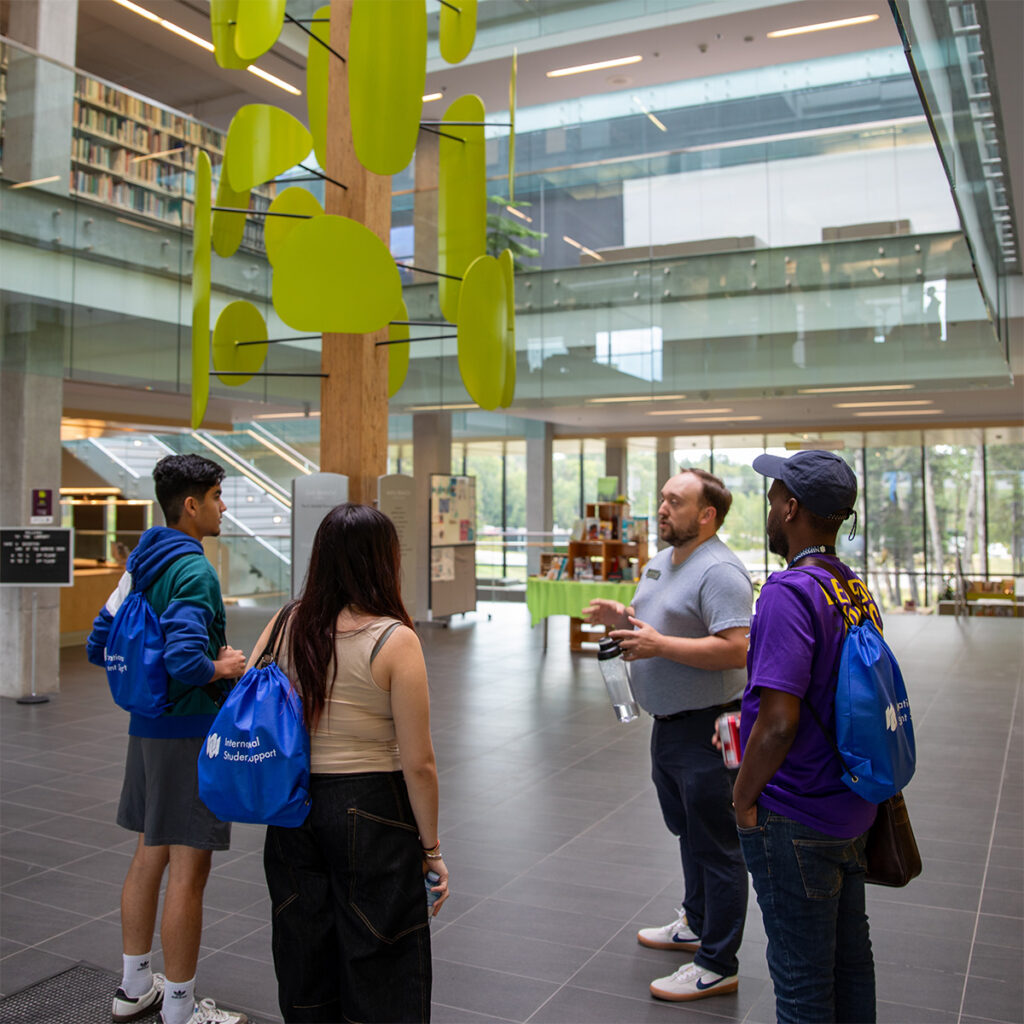
I love the Bachelor of Environmental Geography because not only do I learn about important environmental issues and solutions, but I also learn about how we as a society have shaped who we are and how we got to where we are today.
Briar L.
Class of 2029

I love working with the profs in my program, they are all so helpful and very understanding, and encouraging!
Ryleigh D.
Class of 2026
Program Requirements
How the Common Degree Structure Works
At Nipissing, you can choose a minor, major, specialization, or honours specialization—each offering a different level of focus and flexibility to match your goals.
Check out this breakdown of the Common Degree Structure to see how you can make your interests fit your degree.
Program Options & Course Requirements
Find required courses for each type of specialization using this link.
Request More Info
Explore Other Programs


Disclaimer:
While every effort is made to ensure accuracy on this site, in the event of a discrepancy, Nipissing’s Academic Calendar is the official reference.